

Medicare Part D provides optional coverage for eligible outpatient prescription medications. Florida residents can receive this coverage through a standalone Medicare drug plan or through many Medicare Advantage plans that include prescription benefits.
Part D plans are offered by private insurance companies approved by Medicare. Each plan can have different premiums, deductibles, covered medications, pharmacy networks, formulary tiers, and coverage requirements. A plan that works well for one person may not fit another person who takes different medications or uses a different pharmacy.
Comparing Part D coverage requires more than looking at the monthly premium. Your total costs and access to medications can depend on whether each prescription is covered, where it falls on the formulary, which pharmacy you use, and whether prior authorization or another plan rule applies.
ProCare Consulting is not affiliated with or endorsed by the U.S. government or the federal Medicare program.
What Is Medicare Part D?

Medicare Part D helps pay for eligible prescription medications. Although Medicare regulates the program, coverage is administered through Medicare-approved private plans, and the specific drugs and costs can vary between plans.
Understanding the two primary ways to receive Part D can help you avoid enrolling in coverage that conflicts with your existing Medicare arrangement.
What Part D Generally Covers
Part D generally covers outpatient prescription medications, including generic and brand-name drugs listed on the plan’s formulary. A formulary is the plan’s list of covered drugs.
Medicare drug plans must cover a broad range of medications, including most drugs in certain protected classes. However, each plan creates its own formulary within Medicare requirements, so a particular medication may be covered by one plan but not another.
Coverage may also depend on:
- The medication’s formulary tier.
- The pharmacy used.
- Prior-authorization requirements.
- Step-therapy rules.
- Quantity limits.
- Whether an exception has been approved.
Standalone Part D Plans
A standalone Part D plan adds prescription coverage to Original Medicare and certain other compatible Medicare arrangements.
You generally need Medicare Part A or Part B to join a standalone Medicare drug plan. The plan is separate from Original Medicare, which means you may receive one card for Medicare and another card for your prescription plan.
Medicare Advantage Plans With Drug Coverage
Most Medicare Advantage plans include Part D prescription coverage. These plans are commonly referred to as Medicare Advantage Prescription Drug plans.
When drug coverage is included, the Medicare Advantage plan administers the medical and prescription benefits. In most cases, someone enrolled in a Medicare Advantage plan that does not include drug coverage cannot add a separate standalone Part D plan.
Joining a standalone drug plan while enrolled in an incompatible Medicare Advantage plan could affect the Medicare Advantage enrollment. Confirm the consequences before submitting a separate Part D application.
What Part D Does Not Cover
Not every medication is covered under Part D. Some drugs may be covered under another part of Medicare, while others may not appear on a specific plan’s formulary.
For example, medications received during a Medicare-covered inpatient hospital or skilled nursing facility stay are generally addressed through Part A. Part B covers a limited number of outpatient medications under specific circumstances, including certain drugs administered in a physician’s office or hospital outpatient setting. Part D generally covers eligible outpatient prescriptions that are not covered under Part A or Part B.
Always verify how a medication is covered rather than assuming it will be paid for through Part D.
Who Is Eligible for Medicare Part D in Florida?
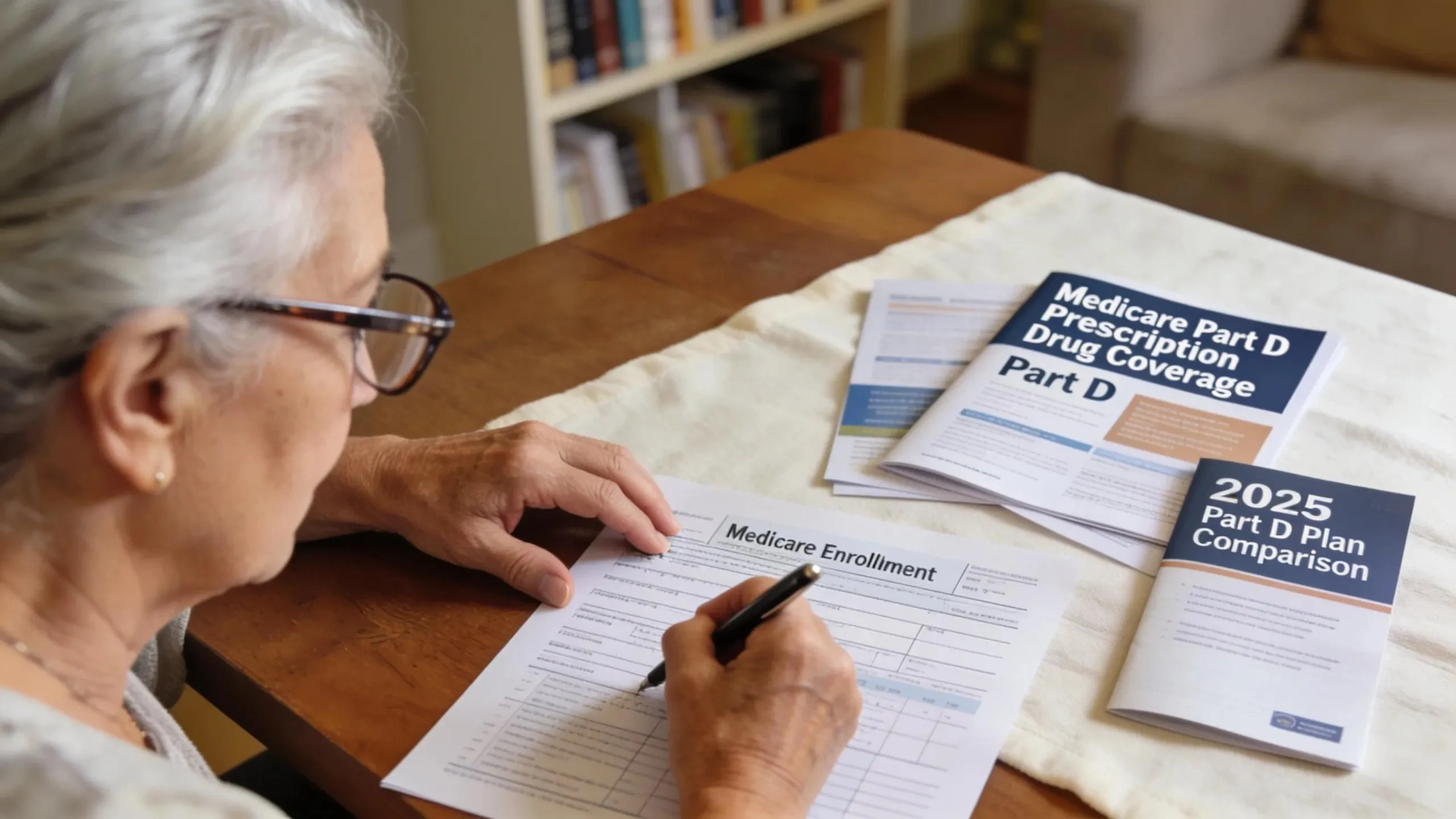
Part D eligibility is connected to Medicare enrollment, lawful presence in the United States, and residence within the plan’s service area. Living in Florida affects which private plans are available, but Florida residency alone does not create Medicare eligibility.
Someone enrolling in a Medicare drug plan generally must have the required Medicare coverage, live within the plan’s service area, and meet the applicable citizenship or lawful-presence requirements.
Medicare Enrollment Requirements
To join a standalone Part D plan, you generally need Medicare Part A or Medicare Part B.
To join a Medicare Advantage plan with prescription coverage, you generally need both Part A and Part B.
You will ordinarily need information from your Medicare card, including your Medicare number and Part A or Part B coverage-start dates, when submitting an enrollment request.
Citizenship and Lawful-Presence Requirements
Applicants generally must be United States citizens or lawfully present in the country.
Medicare’s eligibility language includes several lawful-presence categories, so it is more accurate to confirm the person’s circumstances than to assume every eligible noncitizen must hold the same immigration status.
Florida Service-Area Requirements
A person must live in the service area of the Part D plan they want to join.
Plans available in one Florida county or ZIP code may not be available at another permanent residential address. Premiums, formularies, pharmacy networks, and member costs may also vary by service area.
Eligibility Before Age 65
Most people first qualify for Medicare at age 65, but some people become eligible earlier because of qualifying disability benefits, Amyotrophic Lateral Sclerosis, or End-Stage Renal Disease.
Once the person has the Medicare coverage required for the selected drug plan, the individual can review Part D options available in the applicable service area.
When Can You Enroll in or Change Medicare Part D Coverage?

Medicare drug plans cannot generally be joined, switched, or dropped at any time. You need an applicable enrollment period, and each period permits specific actions.
The enrollment period used can also determine when the new coverage begins. Confirm the effective date before ending existing prescription insurance.
Initial Enrollment Period
For many people who first become eligible for Medicare at age 65, the Initial Enrollment Period begins three months before Medicare eligibility starts and ends three months afterward.
You may generally join a standalone drug plan if you have Part A or Part B. If your enrollment request is submitted before Medicare starts, the drug coverage may begin on the same date as the underlying Medicare coverage. If the request is submitted after Medicare begins, coverage generally starts on the first day of the following month.
People who qualify through disability or another pathway should confirm the Initial Enrollment Period that applies to their circumstances.
Medicare Annual Enrollment Period
The Medicare Annual Enrollment Period runs from October 15 through December 7.
During this period, eligible beneficiaries may generally:
- Join a standalone Part D plan.
- Change standalone Part D plans.
- Drop Part D coverage.
- Move between Original Medicare and Medicare Advantage.
- Add or change drug coverage when permitted by the selected Medicare arrangement.
Valid changes made by December 7 generally take effect January 1 of the following year.
Medicare Advantage Open Enrollment Period
The Medicare Advantage Open Enrollment Period runs from January 1 through March 31 and applies only to people already enrolled in Medicare Advantage.
During this period, an eligible member may generally switch Medicare Advantage plans or leave Medicare Advantage and return to Original Medicare. Someone returning to Original Medicare may also be able to join a standalone Part D plan.
This period is not a general opportunity for someone with Original Medicare to join or freely switch standalone Part D plans.
Special Enrollment Periods
Certain life events or coverage changes may create a Special Enrollment Period. Examples can include:
- Moving to a new address.
- Moving outside a plan’s service area.
- Losing or changing other prescription coverage.
- Becoming eligible for Medicaid.
- Qualifying for Extra Help.
- Entering or leaving certain institutions.
The permitted action, deadline, and effective date depend on the specific event. One qualifying event does not necessarily allow every type of Medicare coverage change.
How Coverage Effective Dates Are Determined
Coverage dates depend on when the valid enrollment request is received and which enrollment period is being used.
During the Annual Enrollment Period, coverage generally starts January 1. For many other enrollment periods, coverage begins on the first day of the month after the plan receives the request. Exceptions can apply, particularly when someone is first becoming eligible for Medicare.
Do not cancel existing prescription coverage solely because an application has been submitted. Confirm that the application was accepted and verify the new plan’s effective date first.
How Does the Part D Late-Enrollment Penalty Work?

Delaying Part D does not automatically result in a penalty. The key issue is whether you maintained other creditable prescription drug coverage and how long you went without qualifying coverage.
The penalty can continue for as long as you have Medicare drug coverage, so it is important to understand the rules before declining or dropping Part D.
What Creditable Prescription Coverage Means
Creditable prescription coverage is insurance expected to pay, on average, at least as much as standard Medicare drug coverage.
It may include qualifying prescription coverage from:
- A current or former employer.
- A union plan.
- TRICARE.
- The Indian Health Service.
- The Department of Veterans Affairs.
- Certain retiree plans.
The existing plan is responsible for telling members whether its prescription coverage is creditable.
Discount cards, free clinics, manufacturer assistance, and drug-discount websites are not considered creditable prescription insurance.
When a Penalty May Apply
A Part D late-enrollment penalty may apply when, after your Initial Enrollment Period ends, you go 63 consecutive days or longer without Part D or other creditable prescription coverage.
The fact that you currently take no medications does not prevent a future penalty. The penalty is based on the period without qualifying coverage, not on the number of prescriptions you use.
How the Penalty Affects the Premium
The Part D penalty is generally calculated using the national base beneficiary premium and the number of full months you were eligible for Part D but did not have Part D or other creditable coverage.
The amount is added to the monthly plan premium. Because the national base beneficiary premium can change each year, the penalty amount may also change. In most cases, the penalty continues for as long as you have Part D coverage.
People receiving Extra Help do not pay a Part D late-enrollment penalty while they qualify for that assistance.
Why Creditable-Coverage Notices Matter
Employers, unions, and other plans generally send written notices explaining whether their prescription coverage is creditable.
Keep these notices with your Medicare records. A Medicare drug plan may ask you to provide information about previous creditable coverage when determining whether a penalty applies.
What to Confirm Before Dropping Existing Coverage
Before ending employer, union, retiree, or other drug coverage, ask:
- Is the coverage creditable?
- When will it end?
- Will Part D enrollment terminate medical or dependent coverage?
- Will a spouse or dependent lose benefits?
- When will the replacement drug plan begin?
- Does the existing plan coordinate with Medicare?
Medicare advises beneficiaries to speak with the benefits administrator or insurance provider before making changes to other coverage.
What Does Medicare Part D Cost?
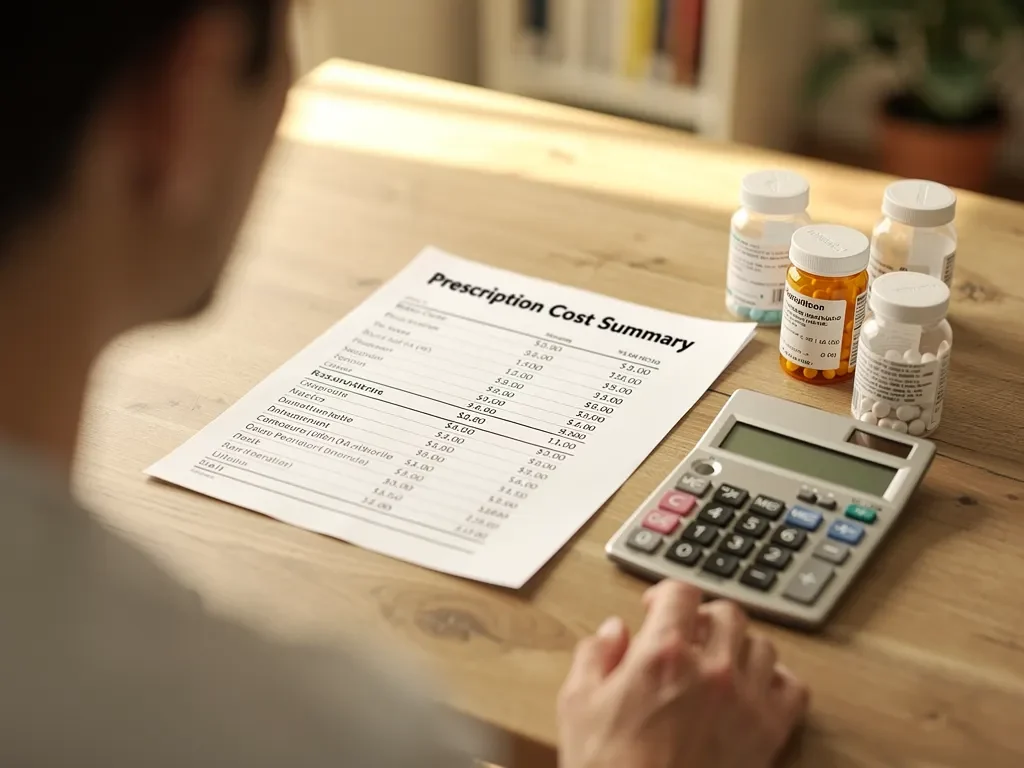
Part D costs depend on the plan, medications, pharmacy, income, and eligibility for financial assistance. Monthly premium alone does not show the full cost of coverage.
For a useful comparison, consider premiums, deductibles, copayments, coinsurance, pharmacy pricing, formulary tiers, and the annual limit on qualifying out-of-pocket spending.
Monthly Plan Premiums
Most standalone Part D plans charge a monthly premium. The amount varies by plan and service area.
Your monthly amount may also include:
- An income-related adjustment.
- A late-enrollment penalty, when applicable.
- Premium assistance through Extra Help, when eligible.
Part D premiums and plan benefits can change annually.
Income-Related Adjustments
Some beneficiaries with higher incomes pay an additional Part D income-related monthly adjustment amount.
This amount is separate from the plan premium. Income thresholds and adjustment amounts can change annually, so current Medicare and Social Security information should be reviewed for the applicable year.
Annual Deductibles
A deductible is the amount you may need to pay for covered prescriptions before the plan begins paying under its applicable benefit rules.
For 2026, a Medicare drug plan cannot have a deductible higher than $615. Some plans have a lower deductible or no deductible. A plan may also apply its deductible differently to medications in different formulary tiers.
Copayments and Coinsurance
A copayment is a fixed amount paid for a covered prescription. Coinsurance is a percentage of the medication’s covered cost.
The amount you pay can depend on:
- The medication’s tier.
- The pharmacy selected.
- Whether the deductible has been met.
- Whether the pharmacy is preferred or standard.
- The quantity dispensed.
- The current Part D coverage stage.
The 2026 Part D Out-of-Pocket Limit
In 2026, beneficiaries enter catastrophic coverage after qualifying out-of-pocket spending on covered Part D medications reaches $2,100.
Once that level is reached, the beneficiary pays $0 out of pocket for covered Part D drugs for the remainder of the calendar year. Certain payments made on the beneficiary’s behalf, including qualifying Extra Help payments, can count toward the threshold.
These figures apply to 2026 and should be reviewed when Medicare publishes amounts for a new calendar year. You may also find Medicare Dental, Vision, & Hearing Plans in Florida helpful.
The Medicare Prescription Payment Plan
The Medicare Prescription Payment Plan is a payment option that allows eligible beneficiaries to spread qualifying out-of-pocket prescription expenses across the calendar year.
It may make monthly expenses easier to manage, but it does not reduce the total cost of the medications.
Why General Florida Cost Averages Can Be Misleading
Part D premiums and medication costs vary by plan, service area, pharmacy, and prescription list.
A general Florida average does not show what a particular person will pay. The more useful comparison is based on the plans available at the person’s permanent address, the specific medications taken, and the pharmacies likely to be used.
How Should You Compare Medicare Part D Plans?

Part D comparisons should begin with your actual medications and pharmacy preferences. A plan with the lowest premium may produce higher total costs if your prescriptions are placed on expensive tiers or your preferred pharmacy has higher cost-sharing.
Use the same medication and pharmacy information when reviewing every plan.
Prepare a Current Medication List
For each prescription, record:
- The exact medication name.
- Dosage.
- Quantity.
- Refill frequency.
- Whether you use a generic or brand-name version.
- The pharmacy where you usually fill it.
Update the list whenever a prescription changes.
Confirm That Each Medication Is Covered
Review the formulary for every medication.
Do not stop after confirming that the drug appears on the list. Check:
- Its tier.
- Prior authorization.
- Step therapy.
- Quantity limits.
- Specialty-pharmacy requirements.
- Whether a lower-cost alternative is listed.
Compare Pharmacy Access
Check local, mail-order, specialty, and seasonal pharmacy options.
Florida residents who spend part of the year in another state should confirm whether appropriate network pharmacies are available in both locations. Medicare advises beneficiaries with seasonal residences to check whether the selected plan works where they stay.
Compare Total Expected Costs
Include:
- Monthly premium.
- Deductible.
- Medication copayments.
- Coinsurance.
- Preferred-pharmacy pricing.
- Mail-order pricing.
- Income-related adjustments, when applicable.
- Late-enrollment penalties, when applicable.
- Expected out-of-pocket drug spending.
Medicare’s plan-comparison system allows beneficiaries to enter prescriptions and review estimated monthly and annual costs for available plans.
Review Coverage Restrictions
A medication may technically be covered but still require additional steps.
Look for:
- Prior authorization.
- Step therapy.
- Quantity limits.
- Refill limits.
- Specialty-pharmacy use.
- Transition-fill rules.
When new drug coverage begins, a beneficiary may qualify for a temporary transition supply of a medication that is not covered or is subject to certain plan restrictions. The exact process should be confirmed with the plan.
Review Current Plan Documents
Before enrolling, review the current:
- Evidence of Coverage.
- Formulary.
- Pharmacy directory.
- Summary of Benefits.
- Annual Notice of Change, when applicable.
Do not rely on last year’s formulary or pharmacy directory because plan terms may change.
How Does Part D Work With Other Medicare Coverage?

Part D does not work the same way with every Medicare arrangement. Before adding prescription coverage, confirm that the plan is compatible with your current medical coverage.
An incompatible enrollment could affect an existing Medicare Advantage plan or other insurance benefits.
Part D With Original Medicare
Someone with Original Medicare may generally enroll in a standalone Part D plan. For more detail, see our article How to Enroll in Medicare in Florida: Dates, Deadlines & Steps.
Original Medicare and the drug plan remain separate. The beneficiary may also have Medigap or other supplemental coverage for eligible Original Medicare cost-sharing.
Part D With Medicare Advantage
Most Medicare Advantage plans include Part D coverage.
In most cases, a beneficiary enrolled in a Medicare Advantage plan that does not offer drug coverage cannot add a separate Part D plan.
What Can Happen if You Join an Incompatible Drug Plan
Joining a standalone Part D plan may cause disenrollment from certain Medicare Advantage arrangements.
Before submitting the application, contact the existing plan or Medicare and ask how the new enrollment would affect current medical and prescription coverage.
Part D and Medigap
Medigap is designed to supplement Original Medicare by helping pay certain Medicare cost-sharing expenses.
Medigap plans sold after 2005 do not include prescription drug coverage. Someone with Original Medicare and a modern Medigap policy may therefore consider a separate Part D plan.
Medigap does not supplement Medicare Advantage, and a Medigap policy cannot be used to pay Medicare Advantage premiums, deductibles, or copayments.
Part D and Medicaid
People who have both Medicare and Medicaid may qualify for Extra Help and additional prescription-related enrollment rights.
The available assistance and member costs depend on the person’s Medicaid category, Extra Help status, plan, and state eligibility circumstances. Avoid assuming every person with Medicare and Medicaid has identical benefits.
How Does Part D Work With Employer, Union, or Retiree Coverage?

Employer, union, and retiree drug benefits may coordinate with Medicare in different ways. Joining Part D without checking the current plan’s rules could affect medical, prescription, spousal, or dependent coverage.
Medicare advises beneficiaries to speak with the benefits administrator or insurance provider before changing existing coverage.
Confirm Whether Drug Coverage Is Creditable
Ask the employer or plan administrator whether the prescription coverage is creditable.
Obtain the answer in writing and keep the notice with your Medicare records.
Review the Creditable-Coverage Notice
The notice should explain whether the existing prescription coverage is expected to pay, on average, at least as much as standard Medicare drug coverage.
The notice can help establish that you maintained qualifying coverage if Medicare later reviews whether a late-enrollment penalty applies.
Ask Whether Part D Enrollment Affects Other Benefits
Before enrolling, ask:
- Will Part D enrollment terminate employer or retiree coverage?
- Will medical coverage also end?
- Will a spouse or dependent lose benefits?
- Is the current drug coverage creditable?
- Can the employer coverage and Part D be used together?
- When will current coverage terminate?
Medicare warns that a beneficiary, spouse, or dependents may lose employer or union health coverage after enrolling in Medicare drug coverage, depending on the plan’s rules.
Coordinate Coverage Effective Dates
Do not end existing prescription coverage before confirming the Part D plan’s approval and effective date.
Keep the enrollment confirmation, plan name, plan contact information, and effective date. If your plan card has not arrived, the enrollment confirmation may help establish coverage at the pharmacy.
What Programs May Help With Medicare Drug Costs?

Some beneficiaries qualify for programs that reduce Part D premiums or out-of-pocket prescription expenses.
These are assistance programs rather than separate Medicare drug insurance plans.
Extra Help
Extra Help, also called the Part D Low-Income Subsidy, is a Medicare program for people with limited income and resources.
It may help pay:
- Part D premiums.
- Deductibles.
- Copayments.
- Coinsurance.
- Other eligible prescription costs.
Extra Help is not a separate insurance plan. It works with qualifying Medicare drug coverage.
Who May Qualify Automatically
A person generally receives Extra Help automatically when the individual has:
- Full-benefit Medicaid.
- Assistance from a Medicare Savings Program with Part B premiums.
- Supplemental Security Income benefits.
Medicare sends a notice explaining the assistance and plan arrangements.
How to Apply for Extra Help
Someone who does not qualify automatically may apply through Social Security.
Eligibility depends on income and resources. Applicants may be asked for financial records such as bank statements, tax returns, retirement-account balances, pensions, annuities, or benefit statements.
Income and resource limits can change annually, so current Social Security or Medicare figures should be used.
Medicare Savings Programs
Medicare Savings Programs are state-administered programs that may help eligible beneficiaries with certain Medicare costs.
Participation in a Medicare Savings Program can also result in automatic Extra Help eligibility. Medicare allows people to apply for Extra Help and initiate a Medicare Savings Program review as part of the same general process.
Other Prescription Assistance Resources
Depending on eligibility, other resources may include:
- Medicaid.
- State Pharmaceutical Assistance Programs.
- Manufacturer Patient Assistance Programs.
- Medicare’s LI NET program for certain people with Medicaid or Extra Help who are not yet enrolled in a drug plan.
Program availability, eligibility, and benefits should be verified before relying on them.
Frequently Asked Questions
Is Medicare Part D Required?
No. Medicare Part D is optional. However, delaying enrollment without maintaining other creditable prescription drug coverage may result in a late-enrollment penalty when you later join a plan.
Do I Need Part A and Part B to Join a Part D Plan?
You generally need Part A or Part B to join a standalone Part D plan. You generally need both Part A and Part B to join a Medicare Advantage plan with prescription coverage.
Are Medicare Part D Plans the Same Throughout Florida?
No. Plan availability, premiums, formularies, pharmacies, and member costs vary by service area and plan year. A plan offered in one Florida county may not be available in another.
Does Every Part D Plan Cover the Same Drugs?
No. Each plan maintains its own formulary within Medicare requirements. All plans must cover a broad range of medications, but they may cover individual drugs differently.
What Should I Do if My Medication Is Not Covered?
Review whether the plan covers a medically appropriate alternative. You or your prescriber may also request a formulary exception.
The prescriber generally must provide a supporting medical statement, and approval is not guaranteed.
Can I Use Any Pharmacy?
You can choose where to fill a prescription, but the plan may limit coverage or charge more when you use an out-of-network pharmacy. Check the current pharmacy directory before filling a medication.
Can I Change Part D Plans During the Year?
Generally, you need an applicable enrollment period. You may change during the October 15–December 7 Annual Enrollment Period or during a Special Enrollment Period when you have a qualifying event. Other opportunities depend on your existing Medicare coverage.
Can I Have Part D and Medigap?
Yes. Someone with Original Medicare may have both a standalone Part D plan and Medigap because the policies serve different purposes.
Medigap helps with specified Original Medicare cost-sharing, while Part D provides outpatient prescription coverage. Modern Medigap policies do not include Part D benefits.
Can I Add Part D to Medicare Advantage?
Most Medicare Advantage plans already include Part D coverage. In most cases, someone enrolled in a Medicare Advantage plan without drug coverage cannot add a standalone Part D plan. Confirm the rules before applying.
Conclusion
Medicare Part D provides optional outpatient prescription coverage through Medicare-approved private plans. Florida residents may receive coverage through a standalone Part D plan or through many Medicare Advantage plans that include drug benefits.
The appropriate plan depends on your medications, dosages, pharmacies, premiums, deductible, formulary tiers, coverage restrictions, other insurance, and eligibility for financial assistance. No Medicare drug plan is automatically the right fit for every beneficiary. See how ProCare Consulting helps Floridians compare plans on our Medicare insurance guidance page.
Review each medication and pharmacy using current plan documents, confirm your enrollment period, and verify the new coverage date before ending existing insurance. To get personal guidance before you enroll, request a free coverage review.
ProCare Consulting works for clients, not insurance companies. Contact a licensed ProCare Consulting advisor to compare Medicare prescription drug coverage available in your Florida service area. Read more in How to Choose a Licensed Medicare Broker in Tampa, FL.