

Medicare Advantage plans give Florida residents another way to receive Medicare Part A and Part B benefits. Depending on the plan, coverage may also include prescription drugs and additional services such as dental, vision, hearing, fitness, or transportation benefits.
However, Medicare Advantage plans are not identical. Provider networks, premiums, copayments, prescription formularies, authorization requirements, and additional benefits can vary by plan and service area. A plan available in one Florida county may not be offered at another permanent address.
Understanding how these plans work can help you compare available options based on your doctors, medications, expected health care use, travel habits, and budget. No Medicare Advantage plan is automatically the right fit for every beneficiary.
ProCare Consulting is not affiliated with or endorsed by the U.S. government or the federal Medicare program.
What Is a Medicare Advantage Plan?

Medicare Advantage, also called Medicare Part C, is an alternative way to receive Medicare-covered hospital and medical benefits. Instead of receiving those benefits directly through Original Medicare, beneficiaries enroll in a Medicare-approved plan administered by a private insurance company.
Medicare recognizes Original Medicare and Medicare Advantage as the two main ways to receive Medicare coverage. A person must generally have both Part A and Part B before joining a Medicare Advantage plan.
How Medicare Advantage Provides Part A and Part B Benefits
Medicare Advantage plans must cover the medically necessary services that Original Medicare covers. This includes eligible hospital, physician, outpatient, preventive, durable medical equipment, and other Medicare-covered services.
The plan may establish its own provider network, referral procedures, prior-authorization requirements, and member cost-sharing within Medicare rules. Beneficiaries remain enrolled in Medicare but receive their covered services through the private plan.
How Private Insurance Companies Administer the Plans
The private insurance company manages the plan’s operations. Depending on the plan, this may include:
- Processing claims.
- Maintaining provider and pharmacy networks.
- Establishing copayments and coinsurance.
- Reviewing prior-authorization requests.
- Managing prescription formularies.
- Administering additional benefits.
Plan details are provided in documents such as the Summary of Benefits and Evidence of Coverage. These documents should be reviewed before enrollment because coverage rules and member costs differ among plans.
Why Medicare Advantage Plans Are Not All the Same
Two plans offered in the same Florida county may have different doctors, hospitals, pharmacies, medications, premiums, copayments, and authorization requirements.
Most Medicare Advantage plans include Part D prescription coverage, and many offer additional benefits not normally covered by Original Medicare. However, the availability and limits of those benefits depend on the specific plan.
How Florida Service Areas Affect Plan Availability
Medicare Advantage plans operate within defined service areas. To join a plan, a beneficiary generally must live in that plan’s service area.
Plan availability can therefore differ by county, ZIP code, and permanent residential address. Moving to another part of Florida may change the plans available and could affect continued eligibility for an existing plan.
What Benefits May Medicare Advantage Plans Include?
Medicare Advantage plans provide Part A and Part B benefits, but many plans also include prescription coverage or additional services. These features can be useful, but they should be evaluated with their networks, limits, authorization rules, and member costs.
An additional benefit should not be considered separately from the plan’s medical coverage. A plan with attractive dental or vision benefits may still be a poor fit if a preferred doctor is outside the network or an important medication is not covered.
Hospital and Medical Coverage
Medicare Advantage plans cover the medically necessary hospital and medical services covered by Original Medicare.
Depending on the service and plan, members may pay a deductible, copayment, or coinsurance. The plan may also require the member to use participating providers or obtain approval before receiving certain services.
Prescription Drug Coverage
Most Medicare Advantage plans include Medicare Part D prescription drug coverage. These plans are often called Medicare Advantage Prescription Drug plans.
Each plan uses a formulary, which is a list of covered medications. Formularies can differ in:
- Covered drugs.
- Medication tiers.
- Preferred pharmacies.
- Deductibles.
- Copayments and coinsurance.
- Prior-authorization requirements.
- Step-therapy rules.
- Quantity limits.
Most types of Medicare Advantage plans do not allow members to add a separate standalone Part D plan. Joining an incompatible drug plan could affect Medicare Advantage enrollment, so beneficiaries should confirm the rules before making a change.
Dental, Vision, and Hearing Benefits
Some Medicare Advantage plans include services that Original Medicare does not normally cover, such as certain routine dental, vision, or hearing benefits.
These benefits may be subject to:
- Annual allowances or maximums.
- Network requirements.
- Limits on the number of covered visits.
- Copayments or coinsurance.
- Prior authorization.
- Restrictions on covered procedures or products.
For example, a dental benefit may cover preventive services but provide limited coverage for crowns, bridges, implants, or dentures. The plan documents should be reviewed to determine exactly what is included.
Fitness, Transportation, and Wellness Benefits
Some plans may provide fitness memberships, transportation to eligible medical appointments, over-the-counter allowances, meal benefits, or wellness resources.
Not every plan includes these services, and eligibility may depend on the member’s circumstances. Transportation benefits may limit the number or distance of trips, while over-the-counter allowances may apply only to approved items or vendors.
Care-Coordination Services
Certain Medicare Advantage plans offer care-management or coordination programs. These services may help members organize appointments, communicate with providers, manage medications, or understand treatment instructions.
Care coordination may be particularly relevant for people receiving services from several providers. However, participating in such a program does not guarantee a particular medical result.
Limitations on Additional Benefits
Before enrolling because of an additional benefit, review:
- Which services are covered.
- Whether a network applies.
- How frequently the benefit may be used.
- Whether an annual limit applies.
- Whether unused allowances carry forward.
- Whether prior authorization is required.
- Which expenses remain the member’s responsibility.
A benefit may sound valuable in an advertisement but provide limited practical value if its rules do not match the beneficiary’s needs.
How Much Do Medicare Advantage Plans Cost in Florida?

Medicare Advantage costs vary by plan, service area, prescription needs, and health care use. A useful comparison should include the complete cost structure rather than focusing only on the advertised monthly premium.
Beneficiaries should review premiums, deductibles, copayments, coinsurance, drug costs, provider-network rules, and the annual medical out-of-pocket limit.
The Medicare Part B Premium Still Applies
A person enrolled in Medicare Advantage generally must continue paying the applicable Medicare Part B premium.
This requirement applies even when the Medicare Advantage plan itself has no additional monthly plan premium. Some beneficiaries may also pay an income-related adjustment or another applicable Medicare premium.
What a $0 Additional Plan Premium Means
Some Medicare Advantage plans may have a $0 additional plan premium. This means the plan does not charge an additional monthly premium beyond the applicable Medicare premiums.
It does not mean that the coverage has no cost. Members may still pay:
- The Part B premium.
- Medical or prescription deductibles.
- Primary-care and specialist copayments.
- Hospital cost-sharing.
- Coinsurance.
- Prescription expenses.
- Costs for noncovered services.
- Higher charges for certain out-of-network care.
A $0 additional plan premium should therefore be considered as one component of the plan rather than proof that the plan will produce lower total costs.
Additional Medicare Advantage Premiums
Some Medicare Advantage plans charge an additional monthly premium. The amount may reflect the plan’s design, drug coverage, service area, or supplemental benefits.
A higher premium does not automatically indicate broader or more suitable coverage. Similarly, a lower premium does not establish that the member will have lower total annual expenses.
Deductibles, Copayments, and Coinsurance
Medicare Advantage plans may use several forms of cost-sharing:
- A deductible is an amount the member pays before certain coverage begins.
- A copayment is a fixed amount for a covered service.
- Coinsurance is a percentage of the covered cost.
A plan may charge one amount for a primary-care visit and another for specialist, outpatient, emergency, hospital, diagnostic, or rehabilitation services.
Review services that are likely to be used rather than relying only on a general cost summary.
Annual Medical Out-of-Pocket Limits
Medicare Advantage plans establish an annual limit on what members pay for covered Medicare medical services under the plan. Once the applicable limit is reached, the plan pays for covered services addressed by that limit for the remainder of the year.
The limit varies by plan. In-network and out-of-network services may also have different limits under certain plan structures.
Prescription drug expenses generally follow separate rules and should not automatically be assumed to count toward the medical out-of-pocket limit.
Prescription Drug Costs
Prescription expenses can depend on:
- The medication’s formulary tier.
- Whether the pharmacy is preferred.
- The plan’s drug deductible.
- The quantity prescribed.
- Whether prior authorization applies.
- Whether a generic or preferred alternative is available.
- The phase of the Part D benefit.
Someone taking several medications should enter each drug, dosage, quantity, and preferred pharmacy when comparing plans. Medicare’s plan-comparison system can provide estimates based on that information.
Why Statewide Price Ranges Can Be Misleading
General Florida premium or copayment ranges may not reflect the plans available at a particular address.
Plan costs can change by:
- County or service area.
- Insurance company.
- Plan design.
- Provider network.
- Prescription coverage.
- Contract year.
Current plan documents provide a more reliable comparison than an unsupported statewide average.
How Do Medicare Advantage Provider Networks Work?
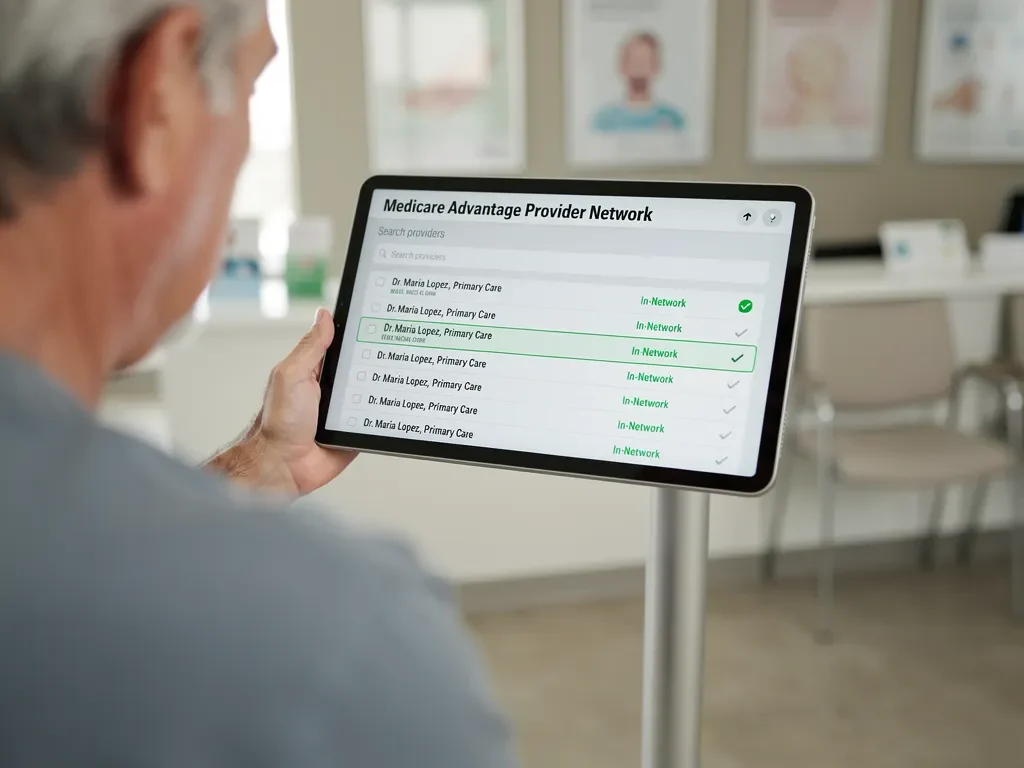
Provider networks are groups of doctors, hospitals, pharmacies, laboratories, facilities, and other health care professionals that have agreements with a plan.
Network participation can affect whether a service is covered and how much the member pays. Medicare Advantage members may need to use network providers for nonemergency care, although the rules depend on the plan type.
How HMO Networks Generally Work
A Health Maintenance Organization, or HMO, plan generally requires members to receive nonemergency care from providers within the plan’s network.
Depending on the plan, members may also need to:
- Select a primary-care provider.
- Obtain referrals for specialist care.
- Use network hospitals and facilities.
- Receive prior authorization for certain services.
Out-of-network care may not be covered except in specified situations, such as emergency or urgently needed care. Exact rules vary, so the Evidence of Coverage should be reviewed.
How PPO Networks Generally Work
A Preferred Provider Organization, or PPO, plan generally allows members to use both in-network and certain out-of-network providers.
Members typically pay less when using participating providers and may pay more when receiving covered care outside the network. Out-of-network access does not mean that every provider or service will be covered.
Before using an out-of-network provider, confirm whether the service is eligible and what cost-sharing will apply.
Referrals and Prior Authorization
A referral is a direction from one provider, often a primary-care physician, to another provider or specialist.
Prior authorization means the plan must approve certain services, procedures, equipment, or medications before coverage is provided.
Some Medicare Advantage plans require referrals or prior authorization, while others do not require them for the same services. Medicare notes that Medicare Advantage members may need plan approval before certain services or supplies are covered.
In-Network and Out-of-Network Costs
Using an in-network provider generally gives the member access to the plan’s negotiated rates and standard cost-sharing.
Out-of-network care may:
- Cost more.
- Be subject to a separate deductible.
- Count toward a different out-of-pocket limit.
- Require advance approval.
- Be excluded except in certain circumstances.
Network rules should be considered carefully by anyone who receives regular care from several doctors or health systems.
Emergency and Urgent Care
Emergency and urgently needed care follow applicable Medicare and plan rules. Network restrictions generally apply most directly to routine, nonemergency services. We cover this further in Secure Your Future with Florida Medicare Planning Services.
Members should still review how the plan handles urgent care, ambulance services, emergency follow-up care, and care received while traveling.
How to Verify Doctors and Hospitals
Before enrolling, take the following steps:
- Check the plan’s current provider directory.
- Contact the plan using the member or enrollment number.
- Contact the doctor, hospital, or facility.
- Provide the complete plan name and network.
- Confirm whether the provider is accepting new patients.
Medicare recommends asking doctors and pharmacies whether they participate in the plan. Provider participation can change, so it should be checked with both the plan and the provider.
Travel and Seasonal Residence Considerations
Florida residents who travel frequently or live in another state for part of the year should review how the plan covers routine care outside its service area.
Medicare specifically advises people who live in another state for part of the year to check whether the plan will cover them there. Emergency coverage alone may not provide suitable access to routine specialists, follow-up appointments, physical therapy, or ongoing treatment.
Who Is Eligible for Medicare Advantage in Florida?

Medicare Advantage eligibility is based on federal Medicare requirements and residence within the chosen plan’s service area. Living in Florida by itself does not create Medicare eligibility.
People generally become eligible for Medicare at age 65, although some qualify earlier through disability or certain medical conditions.
Part A and Part B Enrollment Requirements
A person must generally have both Medicare Part A and Part B to join a Medicare Advantage plan.
The applicant will also need information found on the Medicare card, including the Medicare number and Part A and Part B coverage-start dates.
Citizenship and Lawful-Presence Requirements
To join a Medicare health or drug plan, an applicant generally must be a United States citizen or lawfully present in the country.
Individual eligibility circumstances can differ, so questions about federal Medicare eligibility should be confirmed with Social Security or Medicare.
Plan Service-Area Requirements
Applicants must live in the service area of the Medicare Advantage plan they want to join. You may also find How to Choose the Right Medicare Advantage Plan helpful.
A temporary mailing address or seasonal location does not necessarily determine plan eligibility. Plan availability is generally based on the beneficiary’s permanent residential address.
Medicare Eligibility Before Age 65
Some people may qualify for Medicare before age 65 because they receive qualifying disability benefits or have permanent kidney failure. People with ALS may also qualify under special Medicare timing rules.
Once a person has the required Part A and Part B coverage, the individual may consider Medicare Advantage plans available in the applicable service area. For more detail, see our article What to Consider When Choosing a Medicare Plan in Florida.
How Moving Can Affect Eligibility for a Plan
Moving outside a plan’s service area may mean the beneficiary can no longer remain enrolled in that plan.
A permanent move can also create a Special Enrollment Period that allows the beneficiary to join another plan or return to Original Medicare. The available actions and deadlines depend on the circumstances. For more detail, see our article How to Choose a Licensed Medicare Broker in Tampa, FL.
When Can You Enroll in or Change a Medicare Advantage Plan?

Medicare Advantage plans cannot be joined, switched, or dropped at any time without an applicable enrollment right. For more detail, see our article How to Choose the Right Medicare Plan in Florida.
Each enrollment period has its own eligibility rules and permitted actions. Beneficiaries should determine which period applies before submitting a request.
Initial Enrollment Period
For many people becoming eligible at age 65, the Initial Enrollment Period creates a seven-month window surrounding the start of Medicare eligibility.
To join Medicare Advantage, the person generally needs both Part A and Part B. The date plan coverage begins can depend on when the plan receives the enrollment request and when the underlying Medicare coverage starts.
Medicare Annual Enrollment Period
The Medicare Annual Enrollment Period runs from October 15 through December 7.
During this period, eligible beneficiaries may generally:
- Join a Medicare Advantage plan.
- Switch Medicare Advantage plans.
- Leave Medicare Advantage and return to Original Medicare.
- Join, switch, or drop eligible Part D coverage.
Changes generally take effect January 1 of the following year when the valid request is received by the deadline.
Medicare Advantage Open Enrollment Period
The Medicare Advantage Open Enrollment Period runs from January 1 through March 31 and applies only to people already enrolled in Medicare Advantage.
During this period, an eligible member may generally:
- Switch to another Medicare Advantage plan.
- Leave Medicare Advantage and return to Original Medicare.
- Join a separate Part D plan when returning to Original Medicare, when permitted.
This is not a general opportunity for a person with Original Medicare to join Medicare Advantage. Coverage generally begins on the first day of the month after the plan receives the request.
Special Enrollment Periods
Certain life events or coverage changes may create a Special Enrollment Period.
Examples can include:
- Moving to a new address.
- Moving outside a plan’s service area.
- Losing or changing other coverage.
- Becoming eligible for Medicaid.
- Qualifying for Extra Help with prescription costs.
- Entering or leaving certain institutions.
The available action, deadline, and effective date depend on the specific qualifying event. Not every move or insurance change permits every type of plan change.
Ways to Submit an Enrollment Request
An eligible beneficiary may generally submit a Medicare Advantage enrollment request by:
- Using Medicare’s plan-comparison and enrollment system.
- Contacting the plan directly.
- Calling Medicare.
- Working with a properly licensed insurance agent or broker.
Before changing coverage, Medicare recommends reviewing plan costs, prescriptions, providers, pharmacies, and the way the plan works with any other insurance.
How Does Medicare Advantage Compare With Original Medicare?

Medicare Advantage and Original Medicare are different ways to receive Medicare-covered services. Neither structure is automatically better for everyone. Read more in Compare Florida Medicare Plans for Better Coverage.
The appropriate fit depends on provider access, prescription medications, travel, monthly premiums, potential cost-sharing, and comfort with network and authorization rules.
Who Administers the Coverage
Original Medicare is administered by the federal government and includes Part A and Part B. Medicare Advantage provides Part A and Part B benefits through a Medicare-approved private insurance plan. We cover this further in Original Medicare vs. Medicare Advantage in Florida: Which is Best.
Provider Access
With Original Medicare, beneficiaries may generally use eligible doctors and hospitals throughout the United States that accept Medicare.
Medicare Advantage members may need to use providers in the plan’s network and service area for nonemergency care. Some plans provide certain out-of-network benefits, often at a higher member cost.
Prescription Coverage
Original Medicare does not automatically include most outpatient prescription drug coverage. Beneficiaries may join a separate Part D plan.
Most Medicare Advantage plans include Part D coverage. In most Medicare Advantage plan types, members cannot add a separate standalone Part D plan.
Out-of-Pocket Costs
Original Medicare alone does not have a general annual out-of-pocket limit. Beneficiaries may consider Medigap or other supplemental coverage to help with eligible cost-sharing.
Medicare Advantage plans have annual limits on member spending for covered Medicare medical services. The amount and rules vary by plan.
Additional Benefits
Original Medicare generally does not cover some routine dental, vision, and hearing services. Many Medicare Advantage plans offer additional benefits, but coverage amounts, networks, service limits, and member costs differ.
Plan Rules and Authorization Requirements
Original Medicare generally does not require prior authorization for most covered services.
Medicare Advantage plans may require referrals or prior authorization for certain care. Requirements should be checked in the plan’s current documents.
Can Medigap or a Separate Part D Plan Be Used With Medicare Advantage?

Medigap and standalone Part D coverage do not work with Medicare Advantage in the same way they work with Original Medicare. Understanding these relationships is important because joining an incompatible policy could affect existing coverage.
Why Medigap Is Not Used With Medicare Advantage
Medigap is private supplemental insurance designed to work with Original Medicare. A Medigap policy cannot be used to pay Medicare Advantage premiums, deductibles, copayments, or coinsurance. A person generally cannot buy Medigap while enrolled in Medicare Advantage unless the person is switching back to Original Medicare.
When a Standalone Part D Plan May Not Be Permitted
Most Medicare Advantage plans include Part D prescription coverage.
In most Medicare Advantage plan types, members cannot enroll in a separate standalone Part D plan. Before submitting a Part D enrollment request, confirm how it could affect the existing Medicare Advantage plan.
Returning to Original Medicare
A Medicare Advantage member may be able to return to Original Medicare during the Annual Enrollment Period, the Medicare Advantage Open Enrollment Period, or an applicable Special Enrollment Period.
Someone returning to Original Medicare may also be able to enroll in a standalone Part D plan, depending on the enrollment right being used.
Medigap Availability After Leaving Medicare Advantage
A person should not assume that every desired Medigap policy will be available after leaving Medicare Advantage.
Availability may depend on:
- Federal guaranteed-issue protections.
- Trial rights.
- The reason for leaving Medicare Advantage.
- Application timing.
- Applicable state requirements.
- Medical underwriting.
Medicare describes limited trial-right circumstances in which a person may be able to regain previous Medigap coverage or purchase certain policies after returning to Original Medicare.
How Should Florida Residents Compare Medicare Advantage Plans?

A useful plan comparison begins with the beneficiary’s actual health care needs. Create a list of doctors, hospitals, prescriptions, expected services, travel patterns, and budget priorities before comparing available plans. Using the same information for every plan produces a more consistent comparison.
Compare Doctors, Hospitals, and Facilities
List preferred:
- Primary-care providers.
- Specialists.
- Hospitals.
- Laboratories.
- Imaging centers.
- Rehabilitation facilities.
- Medical-equipment suppliers.
Check each provider with the plan and the provider’s office. Confirm the complete plan name because one insurance company may offer several plans with different networks.
Review Prescription Medications
For every medication, record:
- The exact name.
- Dosage.
- Quantity.
- Refill frequency.
- Preferred pharmacy.
Compare formulary coverage, tiers, prior authorization, step therapy, quantity limits, and estimated annual costs. Medicare’s plan-comparison system allows beneficiaries to enter their prescriptions and obtain estimated monthly and yearly drug costs for available plans. Read more in Compare Medicare Plans in Florida for Best Coverage Options.
Compare the Complete Cost Structure
Review:
- The Part B premium.
- Any additional plan premium.
- Medical deductible.
- Prescription deductible.
- Primary-care copayments.
- Specialist copayments.
- Hospital cost-sharing.
- Outpatient and diagnostic costs.
- Prescription expenses.
- In-network and out-of-network rules.
- The annual medical out-of-pocket limit.
A plan with a lower premium may have higher costs when care is used. A plan with a higher premium may not necessarily provide better coverage for a particular beneficiary.
Review Additional Benefits and Limitations
For dental, vision, hearing, fitness, transportation, meal, or over-the-counter benefits, determine:
- What is covered.
- Which providers may be used.
- How often the benefit is available.
- Whether an annual allowance applies.
- Whether prior authorization is required.
- What the member pays.
Additional benefits should be reviewed only after the core medical and prescription coverage has been evaluated.
Consider Travel and Seasonal Living
Florida beneficiaries who spend substantial time outside the plan’s service area should check:
- Routine provider access.
- Out-of-network benefits.
- Emergency and urgent-care rules.
- Prescription access.
- Dialysis or ongoing treatment needs.
- Visitor or travel programs.
Medicare advises beneficiaries who live in another state for part of the year to confirm how the plan will cover them in that location.
Review Current Plan Documents
Before enrolling, review the current:
- Summary of Benefits.
- Evidence of Coverage.
- Provider directory.
- Prescription formulary.
- Pharmacy directory.
- Annual Notice of Change, when applicable.
Plan details can change from year to year. A previous provider directory or benefit summary should not be treated as proof of current coverage.
Common Medicare Advantage Comparison Mistakes

Medicare Advantage comparisons can become misleading when a person focuses on one advertisement, premium, benefit, or provider. Avoiding common mistakes can reduce the likelihood of unexpected costs or access limitations.
Treating a $0 Additional Premium as Cost-Free Coverage
A $0 additional plan premium does not eliminate the Part B premium or other member costs. Review deductibles, copayments, coinsurance, prescriptions, and noncovered expenses before estimating total spending.
Choosing Based Only on Dental, Vision, or Hearing Benefits
Additional benefits may be useful, but they should not outweigh the plan’s:
- Medical network.
- Hospital access.
- Prescription formulary.
- Prior-authorization requirements.
- Cost-sharing.
- Annual medical out-of-pocket limit.
The complete coverage structure matters more than one supplemental benefit.
Assuming a Doctor Accepts Every Plan From the Same Company
A provider may participate in one Medicare Advantage plan from an insurance company but not another. Always confirm the exact plan and network with both the plan and the provider.
Assuming Prescription Coverage Is the Same Across Plans
Drug formularies, pharmacy networks, tiers, deductibles, and utilization rules differ. A medication that is affordable under one plan may have different restrictions or member costs under another.
Ignoring Prior Authorization and Referral Rules
Prior-authorization or referral requirements can affect how and when certain care is received. Review these rules for frequently used services, medications, diagnostic testing, therapy, and medical equipment.
Confusing Medicare Advantage With Medigap
Medicare Advantage is an alternative way to receive Part A and Part B benefits. Medigap supplements Original Medicare. It does not supplement Medicare Advantage and cannot be used to pay Medicare Advantage cost-sharing.
Relying on Last Year’s Plan Information
Plan premiums, benefits, networks, formularies, and cost-sharing may change annually. Review current-year information before enrolling or deciding to remain in an existing plan.
Frequently Asked Questions
Is a Medicare Advantage Plan the Same as Medicare Supplement Insurance?
No. Medicare Advantage is an alternative way to receive Part A and Part B benefits through a Medicare-approved private plan.
Medicare Supplement Insurance, or Medigap, works with Original Medicare and may help pay certain Original Medicare cost-sharing. The two products are not used together.
Do I Still Pay the Part B Premium With Medicare Advantage?
Yes. Medicare Advantage members generally must continue paying the applicable Part B premium. Some plans also charge an additional monthly premium.
Do All Medicare Advantage Plans Include Prescription Coverage?
Most Medicare Advantage plans include Part D prescription coverage, but not every Medicare Advantage arrangement does. Review the plan’s drug coverage before enrolling.
Can I Use Any Doctor With Medicare Advantage?
Not necessarily. Medicare Advantage plans may use provider networks and service areas. Some plans provide certain out-of-network benefits, while others limit most nonemergency care to network providers.
Do All HMO Plans Require Referrals?
Referral requirements vary by plan. Review the Evidence of Coverage or contact the plan to confirm whether a referral is required for a particular specialist or service.
Do PPO Plans Cover Every Out-of-Network Provider?
No. PPO plans may offer some out-of-network coverage, but costs and coverage restrictions vary.
Confirm that the service is covered and determine the applicable cost before receiving nonemergency out-of-network care.
Does Medicare Advantage Have an Annual Out-of-Pocket Limit?
Yes. Medicare Advantage plans establish annual limits on member spending for covered Medicare medical services. The amount and the costs that count toward the limit vary by plan.
Can I Have Medigap and Medicare Advantage Together?
No. Medigap supplements Original Medicare and cannot be used to pay Medicare Advantage premiums, deductibles, copayments, or coinsurance.
Can I Add a Separate Part D Plan to Medicare Advantage?
In most Medicare Advantage plan types, members cannot join a separate standalone Part D plan. Before adding drug coverage, confirm how the enrollment could affect the current Medicare Advantage plan.
Are Medicare Advantage Plans the Same Throughout Florida?
No. Plans, premiums, provider networks, formularies, benefits, and member costs vary by service area and plan year. A plan available in one Florida county may not be available in another.
Can I Change Medicare Advantage Plans Later?
A beneficiary may be able to change coverage during:
- The October 15–December 7 Annual Enrollment Period.
- The January 1–March 31 Medicare Advantage Open Enrollment Period, when eligible.
- An applicable Special Enrollment Period.
The changes permitted depend on the enrollment period and current coverage.
What Happens if I Move to Another Florida County?
A permanent move may affect whether the current plan remains available. Moving outside the plan’s service area may create a Special Enrollment Period to select other coverage.
Should I Choose a Plan Based on Extra Benefits?
Additional benefits may be considered, but they should not be the only basis for choosing coverage. Review providers, prescriptions, hospital access, prior authorization, cost-sharing, travel needs, and the annual medical out-of-pocket limit before evaluating supplemental benefits.
Conclusion
Medicare Advantage plans provide another way to receive Medicare Part A and Part B benefits through Medicare-approved private insurance companies. Most plans include Part D prescription coverage, and some offer additional services such as dental, vision, hearing, fitness, transportation, or care-coordination benefits. Learn how we help you choose between Original Medicare, Medicare Advantage and Medigap through Medicare insurance guidance in Florida.
Plan availability, costs, provider networks, formularies, referrals, prior-authorization requirements, and supplemental benefits vary by Florida service area and plan year. The appropriate fit depends on the beneficiary’s doctors, hospitals, prescriptions, expected health care use, travel needs, budget, and comfort with plan rules.
There is no bad insurance, only coverage that may or may not fit the person’s circumstances. To get personal guidance before you enroll, request a free coverage review.
ProCare Consulting works for clients, not insurance companies. Contact a licensed ProCare Consulting advisor to compare Medicare Advantage plans available in your Florida service area. For more detail, see our article Personalized Medicare Consulting Solutions for Florida Residents.